Winter curriculum · Ages 2–9
December Together
A month of seasonal homeschool lessons and a student workbook for learning together through the changing season.
Peek inside December TogetherShort lessons, hands-on projects, and nature study you can fit into your family’s day. Make room for play, follow your child’s questions, and give siblings a chance to learn together.
Peek inside the Christmas Movie Night Bundle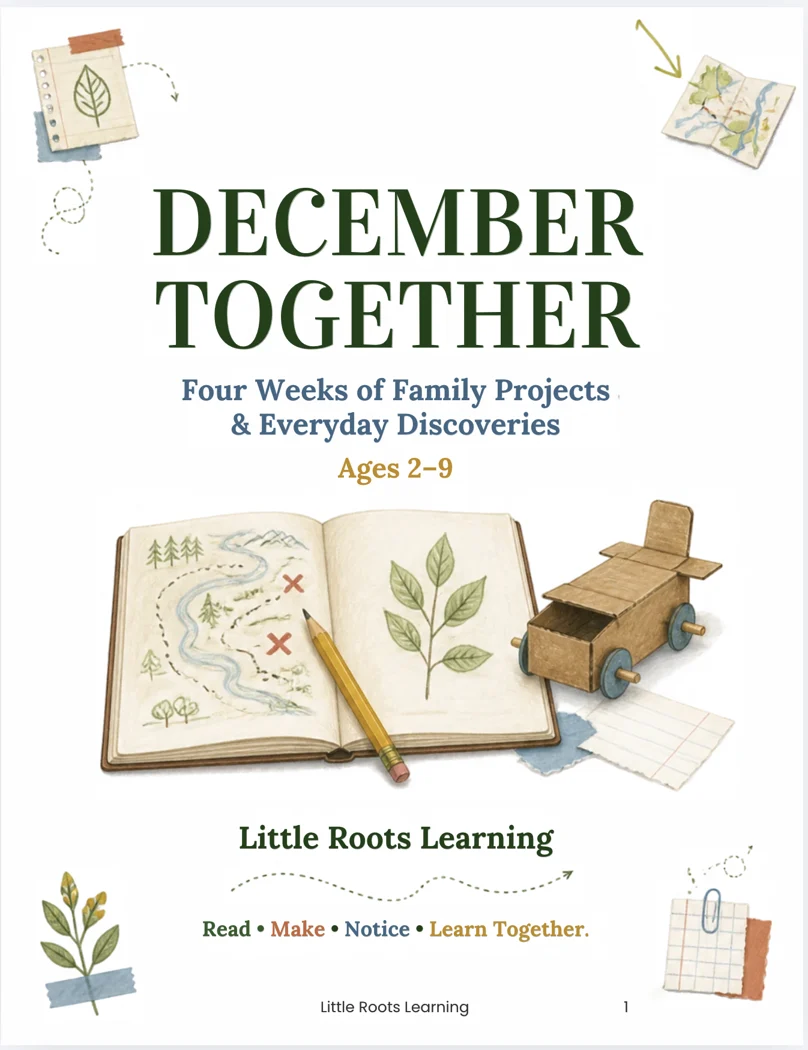
Christmas Movie Night Bundle · 35 pages across 3 PDFs
Plan four family movie nights with printable 5×7 menus, shopping lists, recipes, invitations, golden tickets, food tent cards, and memory pages.
Payhip launch
$10 launch price through . $16 after the sale.
View bundle on Payhip
Start with one free activity on a topic your child enjoys, peek inside a hands-on study, or browse by age below. You can also explore all the collections.
Winter curriculum · Ages 2–9
A month of seasonal homeschool lessons and a student workbook for learning together through the changing season.
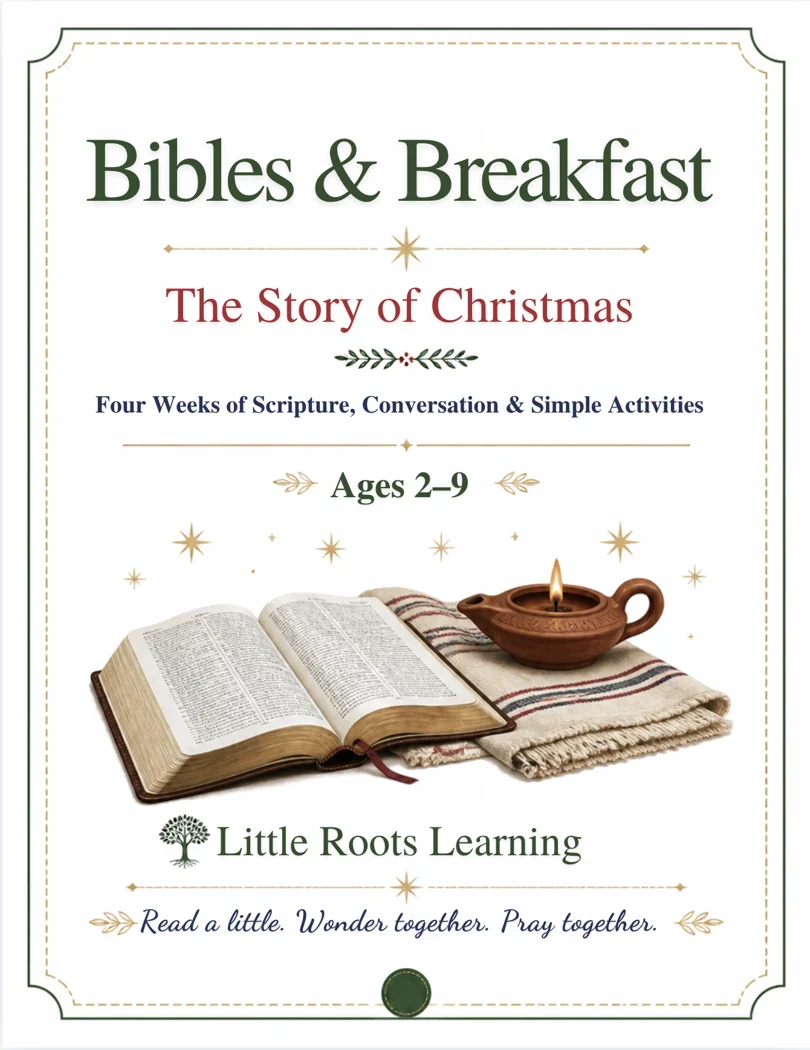
Peek inside December TogetherBible curriculum + workbook
Make time to read and talk about the story of Christmas together.
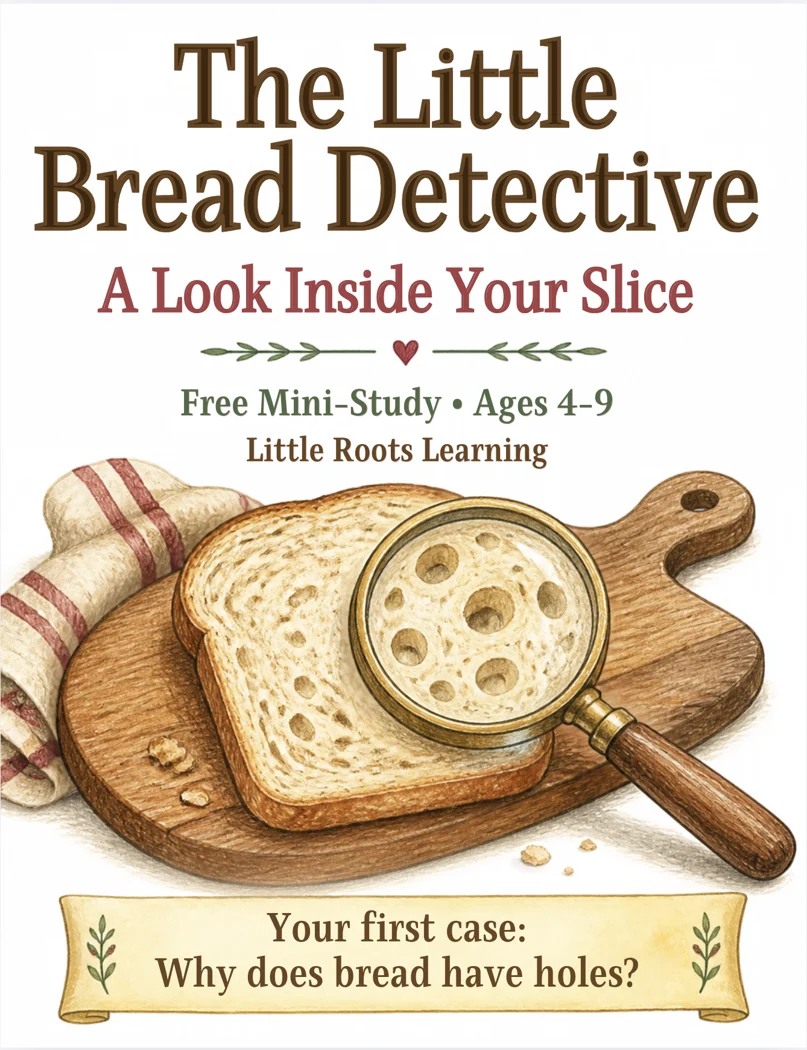
Free mini-study · Ages 4–9
Grab a slice of bread and see what those little holes can teach you. This free printable has six pages.
Try the first activityIn Week One, children turn an everyday moment into a story. Try this lesson with plain paper and a pencil or crayon.
Ages 2–9. Start with the same story prompt. Younger siblings can point, act out a moment, or tell you what happened. Older siblings can draw the scene and write a caption.
View December Together on Payhip

Free printable · Ages 4–9
Look closely at a slice of bread together and ask, “What do you notice about the holes in your slice?” Find one small hole and one larger one, then draw three details you spotted. You can use the picture on the sample page if you don’t have bread handy.
Get the free printable on Payhip

Building challenge · Ages 3–9
Build two cracker walls and see if a brace makes one sturdier. Then put what you learned to work on a cookie house of your own.
View Gingerbread STEM Lab on Payhip
Kitchen experiments · Ages 4–9
Compare two cups to see what makes yeast bubble. Then take turns shaking a jar of cream and watch for the moment the butter separates.
View The Science of Bread & Butter on Payhip
Free science challenge · Ages 3–9
Hide an everyday object in a bag and collect clues by touch and sound. Guess what it is, then switch roles and make a mystery for someone else to solve.
Get the free Mystery Senses Challenge on Payhip
History & engineering · Ages 2–9
Draw a castle with two towers, a gate, and a courtyard. Build it with blocks or recycled boxes and see whether it can stand on its own.
View Castles & Medieval Life on Payhip
Creative writing · Ages 10–14
Spend ten quiet minutes observing one thing in nature. Jot down sounds, textures, and details someone else might miss, then turn those notes into a poem.
View the Poetry Workshop on PayhipI believe childhood should still feel like childhood.

I’m Autumn Whitten, a mom of four and the creator of Little Roots Learning. I started homeschooling during COVID, when I saw that virtual kindergarten wasn’t working for my oldest. I wanted him to have more chances to move, play, and learn at his own pace.
When my younger children were ready for a little more structure, I started making lessons around our kitchen table. I wanted days with good books, muddy hands, and plenty of room for play. I still research, write, and design every Little Roots curriculum myself, and my children are often the first to try it. Sometimes they come up with a better way to do the activity than I did.
I hold a degree in liberal arts with a concentration in psychology and a separate degree in nutrition and dietetics. Studying child development and nutrition has shaped the way I teach. I want our lessons to give children room to move, be creative, and build confidence as they learn.
My Christian faith is at the heart of Little Roots, and the name was inspired by Colossians 2:6–7.
Whether you homeschool full-time, teach preschool at home, or just want something meaningful to do together after school, I’m glad you’re here.
Little Roots is a place for curious kids and the grown-ups learning alongside them. I make flexible, hands-on resources you can use for a whole month, a week on a topic your kids love, or a single afternoon. You’ll find monthly curriculum, seasonal and holiday activities, mini-studies, and resources for parents and educators. There’s also a Little Roots × F3 collection for families who want to move and learn together.
I started homeschooling during COVID, when online kindergarten wasn’t working for my oldest. I began making resources around our kitchen table that left room for play, movement, and curiosity. Read more about how Little Roots grew.
Tiny Learners (ages 2–4) explores through play and movement. Little Roots (ages 5–9) offers hands-on activities and studies. Growing Learners (ages 10–14) digs deeper through investigation, research, and independent work. These age ranges are a guide. Choose what fits your child’s interests and abilities. Browse by age.
Yes! Start with the same topic and adapt the activity to each child. A younger child might learn through play and conversation, while an older child digs deeper through reading, writing, or research. See how a December Together lesson works for siblings.
You’re welcome to use Little Roots whether you homeschool or just want something fun to learn together outside of school.
Yes! You’re welcome to use Little Roots resources with your co-op or classroom. Each educator or group can decide how the resources fit their learners, program, and applicable requirements.
Browse previews here or visit the Little Roots Learning shop for free downloads, paid studies, curriculum, and bundles. Payhip handles checkout and digital downloads.
Little Roots is designed primarily as a supplement. You can also use it as a foundation and add reading, writing, math, and anything else your children need. For younger children, you might weave those skills into the activities. Older learners may benefit from more structured resources alongside their studies.
The monthly curriculum is built around a theme and comes with a student workbook. The main curriculum is secular. Bibles & Breakfast and other faith resources are optional. I also aim to offer enrichment studies or deeper dives on related topics. Check the current listings for individual resources and available bundles.
It depends on the study. Some are short printables or activities. Others include longer lessons, student workbooks, or hands-on projects. Each Payhip listing explains what’s included, the suggested ages, and the price.
There’s a mix of both. Try a free printable or mini-study, or browse paid studies, curriculum, and bundles in the shop.
Print the activity or workbook pages you plan to use. For example, December Together comes as two PDFs. You can read the teaching guide on a screen and print the student workbook pages you want to use. Some activities, like The Little Bread Detective, also work when you look at the page together on a screen.
Send me a message through the shop or message Little Roots Learning on Facebook, and I’ll help you find it.
Subscriptions are optional. One is currently on Facebook and the other is already on Payhip. I’m moving the Facebook subscription to Payhip so both options will be in the same place. I’ll share the updated plan details and next steps for Facebook subscribers once the move is ready.
Paid studies and monthly curriculum are purchased separately. Subscriber discounts and extras depend on the plan. Anyone can browse the shop, use free resources, or buy an individual study.
The Little Roots Online Homeschool Co-op is a free learning community you can join from home. I share themed learning ideas and a coordinating printable. Join in whenever it works for your family. Browse the free co-op workbooks on Payhip.
Browse featured resources and hands-on study previews here. I also share what I’m working on and what’s coming next on the Little Roots Learning Facebook page.
Yes! I love hearing what your kids are curious about. Share a topic, study, or activity idea in the comments on Facebook or send me a note.
When a Facebook post asks for a specific word, commenting with it can trigger a message about that resource. If you use that word in another comment and receive a message you weren’t expecting, you can disregard it.
Yes! I create practical resources for the grown-ups, too. I plan to share more about child development and different ways children learn, along with tools like schedules, planners, and templates you can adapt for your family.
Yes! Each giveaway post explains who can enter and how to participate. Check that post for the details.
Have another question? Send me a note.
Have a question about a study, a download, or where to start? I’m happy to help.